Because they did.
And that was worse.
The video had exploded beyond anything any of us imagined.
Television programs debated it.
Psychologists analyzed it.
Politicians mentioned it in speeches they would probably forget a week later.
Millions of strangers suddenly knew my face.
Some called me brave.
Some called me stupid.
Others accused me of exaggerating, because cruelty always finds defenders when it wears the mask of “family matters.”
Nora’s recording had captured everything.
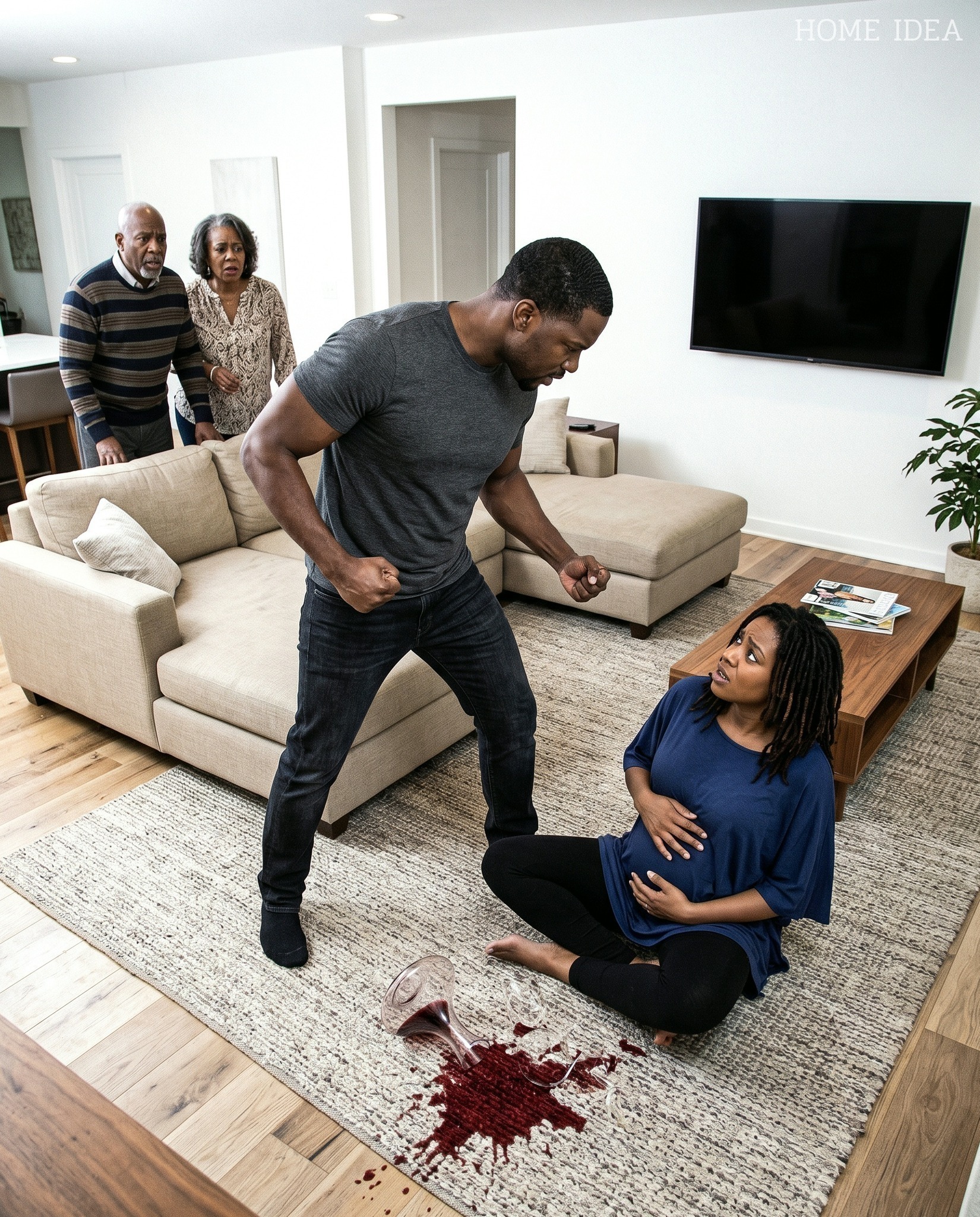
Victor raising the stick.
His mother laughing.
Raúl calling me dramatic while I bled on the kitchen floor.
The internet slowed the footage down frame by frame, dissecting violence like forensic evidence.
And what horrified people most was not Victor.
It was the comfort of the others.
The way they sat there as if suffering were ordinary.
As if cruelty had become tradition.
Three days later, the prosecutor arrived in person.
That was when I understood how serious everything had become.
Victor had been arrested without bail.
Raúl too.
And Helepa—
Helepa had collapsed in front of reporters outside the courthouse screaming that I had “destroyed her family.”
The irony was almost unbearable.
Because people like them always mourn consequences more than victims.
I watched the footage from the hospital television with numb eyes.
Helepa covering her face.
Nora crying while cameras followed her through parking lots.
Victor being escorted in handcuffs wearing the same cold expression he used every time he hurt me.
Except now there was fear underneath it.
Real fear.
The kind abusers feel when the world finally witnesses what happens behind closed doors.
Then came the detail that changed everything again.
The prosecutor discovered previous complaints.
Three women.
Three separate reports over twelve years.
Dismissed.
Withdrawn.
Ignored.
One ex-girlfriend had reported Victor for breaking her ribs.
Another had accused him of stalking her after she left.
The third never finished her statement.
She disappeared from the process entirely.
And suddenly the case stopped being about one violent morning.
It became the exposure of an entire pattern.
A system that had allowed him to continue.
A mother who defended him.
A father who normalized him.
Friends who joked about his temper.
Neighbors who heard screams and increased the television volume instead of calling for help.
People always ask how abuse survives for so long.
Like it’s a mystery.
Like monsters appear out of nowhere.
But violence survives because too many people adjust themselves around it.
The night before my surgery, a nurse handed me a small folded note.
—“Someone left this downstairs for you.”
My hands trembled opening it.
The handwriting was shaky.
Uneven.
Terrified.
“I saw your story online.
I left my husband tonight because of you.
Thank you for surviving long enough for the rest of us to see it.”
No name.
No number.
Just those words.
I stared at the paper for a long time.
Then I cried harder than I had since arriving at the hospital.
Because suddenly the pain was no longer isolated.
It connected me to thousands of invisible women carrying secret bruises beneath sweaters, makeup, silence, and excuses.
Women waiting for someone else to survive first.
Weeks passed.
The bruises turned yellow.
Then green.
Then slowly disappeared from my skin while remaining permanently inside my memory.
Physical wounds heal in an organized way.
Psychological ones do not.
A slammed door still made my chest tighten.
Male voices in hallways made me stop breathing for seconds at a time.
Sometimes I woke up convinced Victor was standing beside the bed.
The baby kicked strongest during those moments, almost as if reminding me:
You’re still here.
One afternoon, Alex brought me a bag recovered from the house.
Inside were my old sketchbooks.
My favorite sweater.
A necklace from our mother.
And my ultrasound photo.
Folded carefully.
Hidden beneath everything else.
I stared at that image for a very long time.
That tiny blurry shape had survived hatred before even entering the world.
And suddenly something inside me shifted.
Not healing.
Not forgiveness.
Something smaller.
But important.
The beginning of refusal.
Refusal to die.
Refusal to disappear.
Refusal to let my child inherit fear as their first language.
The trial was scheduled for autumn.
Reporters waited outside the hospital almost daily.
Advocacy groups contacted me.
Journalists wanted interviews.
Publishers offered money for my story before my bruises had even faded.
The world consumes suffering quickly when it can package it into headlines.
But none of them understood the quietest part of survival.
The hardest part isn’t escaping.
It’s learning afterward that you are still a person beyond the violence.
One night, while the city lights flickered outside my window, I placed my hand over my stomach and whispered something I hadn’t said in years.
Not to Victor.
Not to the police.
Not to the internet.
To myself.
—“We’re going to live.”
And for the first time, I believed it.