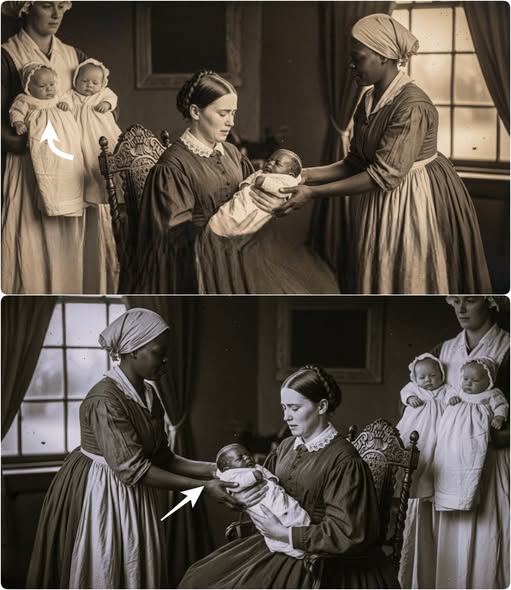
The night of April 23, 1802, was supposed to be a triumph for the Fairmont family of Henrico County, Virginia. Upstairs in the master bedroom of the sprawling 800-acre estate, Margaret Fairmont was in labor. Her husband, Thomas, a man obsessed with legacy and lineage, waited anxiously for an heir. By dawn, the house was filled with the cries of newborns. But while the family Bible would record the births of two healthy sons, Thomas Jr. and Henry, history—and the shadows of the room—held a third cry that was immediately silenced.
Margaret had given birth to triplets. The first two boys were pale and pink, the spitting image of their father. But the third child, born minutes later, arrived with a warm, golden-brown complexion that shattered Margaret’s world in an instant. This child, later named Samuel, was not Thomas’s son. He was the undeniable proof of a summer affair Margaret had hidden—a fleeting connection with a light-skinned carpenter named William. In the brutal social hierarchy of 1802 Virginia, this infant wasn’t just a scandal; he was a death sentence for her reputation.
The Conspiracy of Silence
In a panic that superseded maternal instinct, Margaret turned to Esther, her enslaved personal maid. “Hide him,” she whispered, terrified. “Make sure no one sees.” Margaret’s command was essentially a death warrant. In that era, “making a child disappear” often meant a swift, silent end. But Esther, holding the warm, healthy infant against her chest, made a choice that would defy the cruel logic of the plantation. She would not be an executioner.