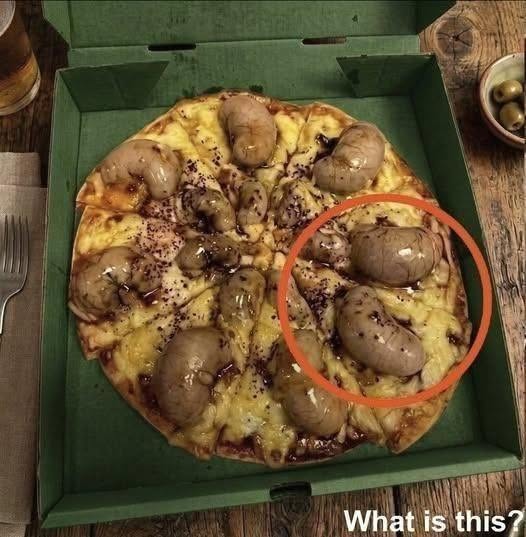
You’ve probably seen the viral posts:
“If you see white spots, slimy film, or odd textures on your pizza—STOP! It’s not cheese… it’s something far worse.”
These claims often include close-up photos of mozzarella with white crystalline spots, slightly wet surfaces, or translucent edges—labeled as “mold,” “plastic,” or even “industrial filler.”
Let’s cut through the fear with science and food expertise.Snack Foods
 Common “Scary” Things People See (And What They Really Are)
1. White, Chalky Spots on Mozzarella
Claim: “It’s mold or chemicals!”
Truth: These are tyrosine crystals—natural amino acid clusters that form as cheese ages.
→ Common in aged mozzarella, provolone, and Parmesan.
→ Harmless, flavor-neutral, and a sign of proper aging.
2. Slightly Slimy or Wet Surface
Claim: “It’s spoiled or fake cheese!”
Truth: Fresh mozzarella is stored in whey or brine to stay moist. When heated on pizza, it releases water—especially if low-moisture mozzarella isn’t fully drained.
→ This is normal moisture separation, not spoilage.
→ Blot fresh mozzarella with paper towels before using to reduce sogginess.Food
3. Translucent or “Plastic-Looking” Cheese After Baking
Claim: “It’s not real cheese—it’s ‘plastic cheese’!”
Truth: Low-moisture mozzarella contains sodium citrate or other emulsifiers to help it melt smoothly without oiling off.
→ This is still real cheese—just processed for consistent melting (like most commercial pizza cheese).
→ True “plastic cheese” doesn’t exist; all cheese is regulated by the FDA.
4. Orange or Pink Tint in Sauce or Crust